
Franklin Previous Residents by Era
Choose sources by year before naming a former household. Franklin has strong early land and probate runs, discrete printed directories, released federal census schedules, and a long series of fire-insurance maps. None is complete alone.
| Source | Years It Covers | Where Held | What It Shows |
|---|---|---|---|
| Recorder deed indexes | 1825-1865, 1865-1888, and 1879-1900 microfilm groups; later online span not stated | Recorder, State Library, vendor index | Grantor, grantee, instrument, and land description |
| Probate and wills | Order books 1831-1852; indexes 1853-1900; wills 1827-1907 | State Library guide and Clerk | Estates, heirs, orders, and transfer context |
| Printed directories | 1895; Franklin runs from 1931 through listed editions ending 2013, with gaps | State Library, JCPL, Museum, partner collections | Name, address or post office, and edition-specific fields |
| Federal census | 1820-1950 now public | NARA and library databases | Household members and residence on census day |
| Sanborn maps | 1886-1927 plus 1927-1948 updates | State Library and public scans | Building footprint, use, materials, and old numbering |
For a modern address, begin with the assessor and deed. For a mid-century household, alternate directory years with census and newspaper evidence. For an earlier rural Franklin post-office entry, use township, section, range, acres, and the deed indexes. The 1895 volume is a land directory, not a list of every city household.
Build a dated ledger as the search grows. Give each row a source year, the name exactly as printed, the address or land identity, the role shown, and a citation key. Leave a blank where a field is absent. This makes gaps visible and stops a deed owner from being silently recast as an occupant. It also separates a directory edition year from the date when its information was gathered.
Anchor Franklin Resident History
Search the physical, or situs, address in Johnson County Beacon. Record the parcel ID, owner, legal description, last sale clue, and result date. Do not substitute the tax mailing address. It can lead to a trustee, business, servicer, agent, or owner in another city.
The legal description is the durable bridge. A subdivision lot, block, or metes-and-bounds description can survive after the street label changes. Research found no verified Franklin renumbering year, so use old plats, cross streets, Sanborn numbers, and Surveyor records when an address disappears.
Starting with land prevents two common errors: linking the wrong person with a common surname, and following a nearby property after a parcel split. If a tract was divided or combined, branch the chain and match each child parcel to the parent description.
Keep the source's geographic label intact. Franklin can mean the city, the 46131 postal area, or an old post-office designation. Johnson County records cover many other towns and unincorporated townships. A county result needs a parcel or boundary check before it is called a Franklin city address.
Walk Franklin Resident Deeds Backward
A chain of title is the linked sequence of recorded ownership instruments. Use the current owner only as the first key. The assessed name may lag the newest deed, so compare the last sale clue and the Recorder instrument itself.
- Copy the current parcel ID and full legal description from Beacon.
- Search the owner as grantee and select the deed matching that land. Record its grantor, date, document number, and linked references.
- Search that grantor as a grantee in earlier years. Narrow by the same subdivision, lot, parcel, or description.
- Pull correction deeds, plats, surveys, probate affidavits, and final decrees cited by the instrument.
- When the vendor index stops, continue at the Recorder counter or with State Library microfilm.
- Grantor
- The party transferring an interest in the land.
- Grantee
- The party receiving the recorded interest.
- Chain of title
- The linked series of instruments that carries ownership backward.
- Legal description
- The recorded land identity, often more stable than a street address.
The legacy Tapestry landing is one documented Johnson County access route.
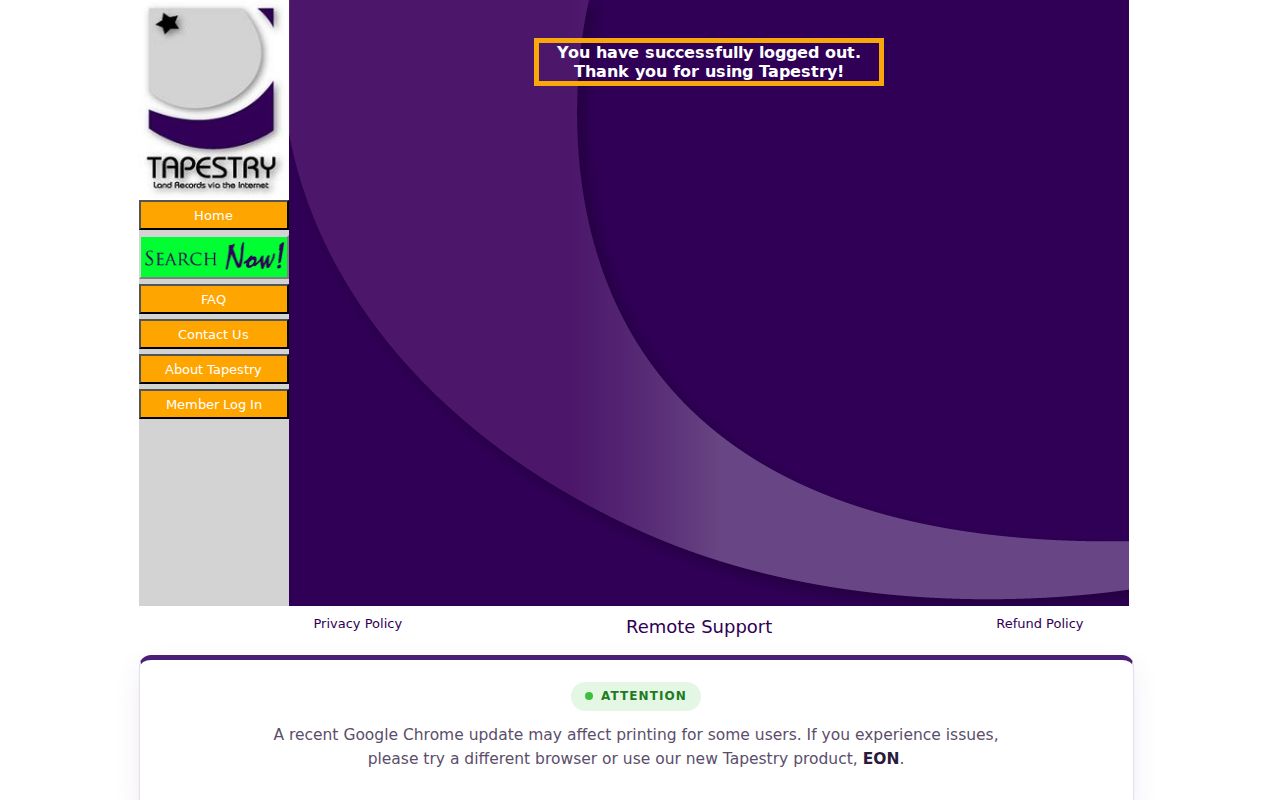
This vendor screen begins the online search, but it does not establish a single historical cutoff. Missing years require the office and microfilm fallback.
Franklin Resident Estates Continue
Ownership may pass through an estate, personal representative, heir, affidavit, or court decree. When a deed trail pauses at a deceased owner, search Johnson County probate material and the Recorder for a final decree or later transfer. Do not treat an estate name as a living person, and do not publish an heir's address.
Historical support is concrete: probate order books cover 1831-1852, probate indexes cover 1853-1900, and wills run from 1827-1907 in the State Library guide. The Clerk holds current probate files. Newspapers, obituaries, cemetery transcriptions, and a matching deed can explain why title moved, but a notice should be checked against an official record.
A final decree may carry title when no ordinary sale deed appears. An affidavit or correction instrument can clarify a name or description without marking a new household. Read the cited document, then return to the same parcel and earlier grantee. If the estate held more than one tract, match the full legal description instead of assuming each filing concerns the target address.
Franklin Address Records on Sanborn
The Indiana State Library Sanborn guide lists Franklin maps for 1886, 1892, 1896, 1902, 1910, 1916, 1927, and later updates through 1948.
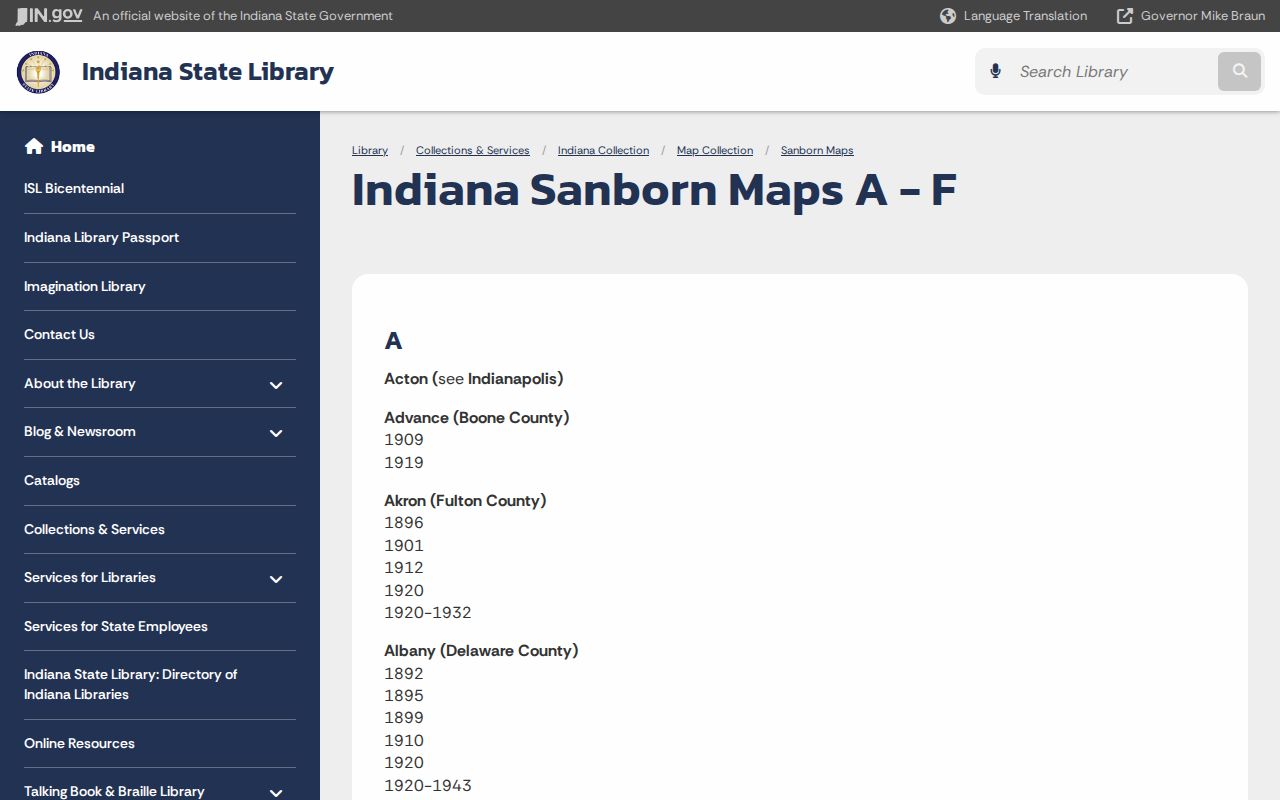
The captured list confirms the city-specific map periods. These sheets can date a footprint, addition, use, material, height, or old house number. They never name the previous residents.
Pair a Sanborn sheet with the closest directory year and a deed. That three-source check can distinguish a change in occupants from a demolished structure or shifted number. Permits may add a build or alteration date, though Franklin's historical permit starting year was not located.
Franklin Archives Fill Record Gaps
The Dan Mitchell Historical Room at the Franklin Branch is the first local stop for directories, maps, and branch-only newspapers. The room was dedicated in July 2024. Researchers reserve or sign in, ask Adult Reference for help, and submit a bounded name, date, and place request. Assistance is limited, so bring known spellings and an exact address or parcel clue.
The Johnson County Museum at 135 N Main Street offers a research library, onsite databases, yearbooks, court, estate, tax, school, church, military, cemetery, and oral-history material. Its documented research service is $25 for up to four hours plus $0.20 per copy or scan; confirm current terms before ordering.
For vital-record forms, the Johnson County document center supplies the local route.
The forms page points to official requests. Eligibility and identification rules still apply to certified birth and death records.
Bridge Franklin's 1895 Land Directory
The 1895 Johnson County directory uses an unusual format that helps an address history reach back before modern street numbering. Its columns can give a name, post office, occupation, and a land description split into section, township, range, acres, and transfer details. A Franklin post office entry is not proof that the land sat inside the present city.
Search surname variants in the OCR, then read the page image because generated text can distort names and numbers. Copy the township heading and each land fragment. Compare them with a plat, Surveyor material, Recorder index, and the current parcel. This turns an old county directory line into a testable land clue.
The volume does not list every household member. Women, tenants, non-landholders, and omitted residents may be missing, so the entry cannot stand alone as proof of all previous residents.
Confirm Franklin Previous Residents
Owners are only part of an address history. A printed directory can supply a named householder near a target year, while a released census can identify household relationships on its enumeration date. The directory's collection year may precede the edition date, so note both when known. The full local runs and reading methods belong on the Franklin city directory page.
- Search the closest directory edition by street section if it has one, or by surname and abbreviation key.
- Check one edition before and after. A gap does not prove that a person moved.
- Match the nearest released census by name, age, relationship, and place, not surname alone.
- Use newspapers, probate, cemetery transcripts, and deeds to explain an arrival, departure, death, or estate transfer.
JCPL's branch newspaper access includes the Franklin Evening Star from 1912-1963 and the Daily Journal from 1963 forward. Obituaries can give family and address clues, but should be checked against the death record, probate file, cemetery material, or another dated source.
The county offers a specific birth-certificate application for eligible requests.
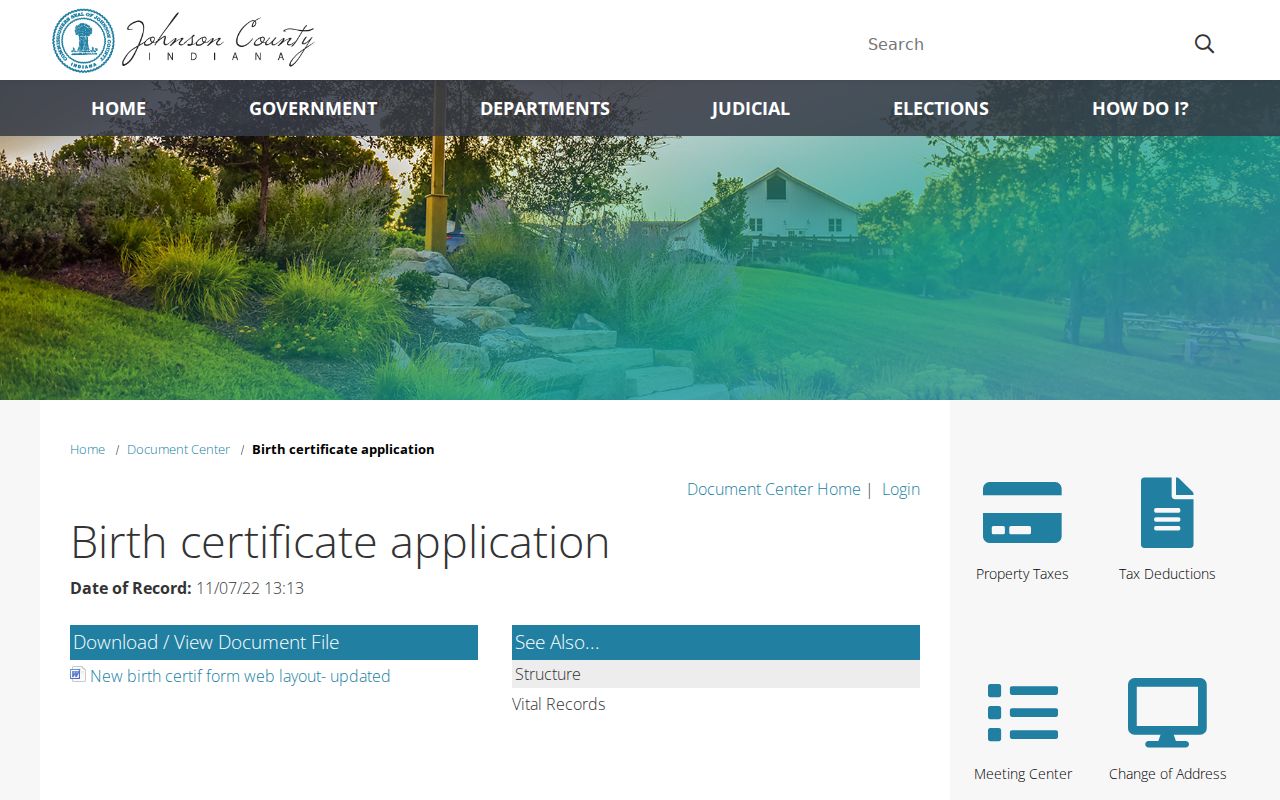
Birth certificates are controlled records, not open resident rolls. Use the application only when the requester meets its rules.
A separate Johnson County death-certificate application supports qualified family and estate research.
The local form can support an endpoint after an obituary or probate clue, subject to the custodian's current proof and identification requirements.
Lawful use. Trace Franklin previous residents for house history, genealogy, or an estate matter. Never use a historical trail to harass, threaten, or track a living person.
A careful conclusion states its limits. “Named as owner,” “listed at the address,” and “part of the census household” are different claims. Preserve the edition, page, instrument number, scan date, and any spelling variant so another researcher can repeat the work.